


7 Reasons Northern Germany Belongs On Your Travel List

When people picture Germany, they're usually picturing Bavaria. Pretzels, Lederhosen, beer halls with oompah bands. And that version of Germany is wonderful. But there's a whole other side of the country that rarely gets its moment, and it might just be the more interesting one.

Northern Germany is all coastline. We're talking close to 3,700 kilometers of it, stretching along the North and Baltic Seas. It's windswept dunes, thatched-roof cottages, medieval old towns, and a port city culture that's been welcoming travelers and traders for centuries. It's quieter than the postcard version of Germany, and that's exactly what makes it special.
We've been dreaming about this region lately, and we wanted to share what's pulling at us. Here are seven reasons why northern Germany deserves a spot on your travel radar.
1. Hamburg Has a Personality All Its Own

Hamburg is Germany's second-largest city and its busiest port, and it has a vibe you won't find anywhere else in the country. This is a city with a serious independent streak. The St Pauli neighborhood, nicknamed the Pirate District, is packed with live music venues, vintage shops, and a nightlife scene that ranges from cozy dive bars to a converted former smugglers' prison.
For a true taste of local life, visit on a Wednesday and head to Spielbudenplatz for the weekly night market, where locals gather in a lively pop-up beer garden to enjoy live music, food, and drinks.
2. The Seafood Is Reason Enough To Go
We're suckers for destinations where the food tells the story, and northern Germany delivers. This is seafood country, where Sylter Royal oysters are harvested off the island of Sylt and steaming pots of winter mussels take center stage on menus throughout the region.
But the one dish you absolutely have to try is the Fischbrötchen—a crusty roll stuffed with fresh or fried fish and topped with pickles, onions, and creamy remoulade. It's northern Germany's signature street food, and after enjoying one fresh from a harbor stand, you'll understand why it's a local favorite.
3. You Can See the Region By Water
In northern Germany, the water is more than a backdrop—it's part of everyday life. Ferries link the islands, canals weave through historic cities, and scenic boat tours offer a fresh perspective on centuries-old architecture that you simply can't experience from land.
In Lübeck, river cruises along the Trave take you past the city's old salt warehouses and gives you sweeping views of the medieval Old Town. And in Hamburg, hopping a commuter ferry along the Elbe River is one of the easiest, most affordable ways to see the city's skyline from the water.
4. Sylt Feels Like Germany's Best-Kept Secret
If you've never heard of Sylt, you're not alone—and that's part of its appeal. Germany's northernmost island has earned comparisons to the Hamptons, thanks to its charming reed-thatched cottages, iconic striped beach chairs, and windswept dunes overlooking the sea. It's the kind of place where German travelers come to slow down, savor fresh seafood, and enjoy a more refined, laid-back coastal escape.
Beyond the beaches, Sylt offers seal-watching tours, barefoot walks across the tidal flats of the Wadden Sea, and a wellness tradition built around the natural elements of the island itself.
5. The Baltic Islands Are Wonderfully Undiscovered
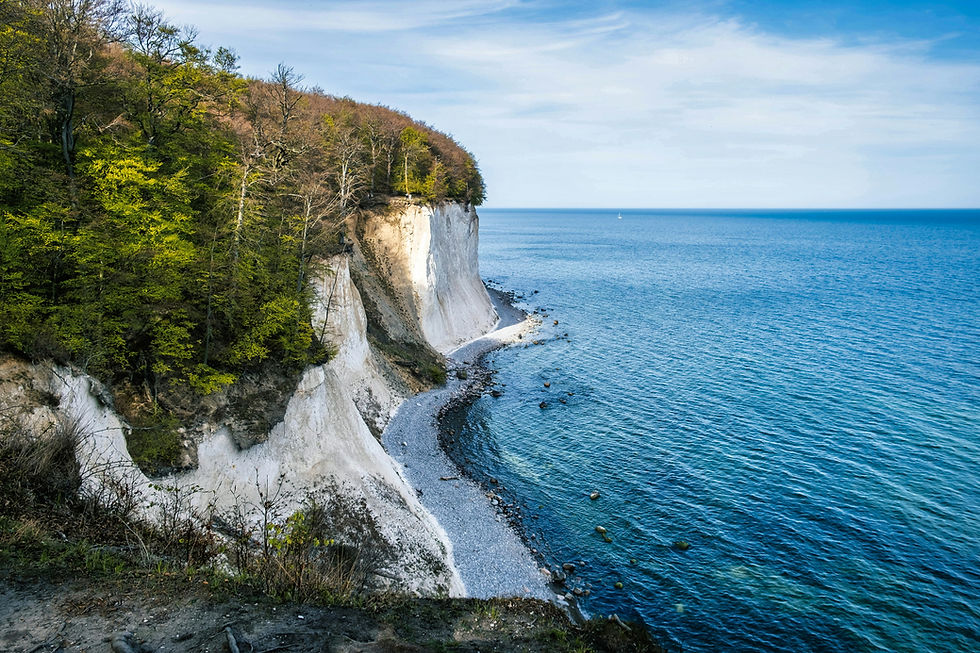
Rügen, Germany's largest island, has captivated painters and poets for centuries. Its soaring white chalk cliffs, framed by ancient beech forests and the Baltic Sea, create one of the country's most breathtaking coastal landscapes. Nearby Hiddensee bans cars entirely, so the only way to explore its quiet harbors and untouched landscapes is on foot, by bike, or by horse-drawn carriage.
These islands invite you to slow down—and that's exactly the point. If you're craving a destination where nature still leads the conversation, this is it.
6. The Architecture Tells a Story Worth Hearing
Hamburg was largely rebuilt after the Second World War, and the result is a fascinating mix of preserved history and bold modern design. St. Nikolai Church, once the tallest building in the world, now stands as a powerful memorial. Its soaring spire is the only part of the church to survive the devastating 1943 bombing of Hamburg.
And then there's the Elbphilharmonie, a striking glass concert hall built right on top of a historic brick warehouse. Ride what's known as Europe's longest escalator up to the free viewing platform, and you'll get one of the best sunset views in the entire city.
7. The Christmas Markets Bring Old World Charm

We couldn't talk about northern Germany without mentioning what might be its most magical season. If a winter getaway is on your wish list, this region’s Christmas markets are among the most beautiful in the country. Picture cobblestone squares glowing under string lights, the scent of mulled wine and roasted chestnuts drifting through the air, and wooden stalls lined with handmade ornaments and Lübeck’s famous marzipan.
In December, Hamburg’s historic squares and Lübeck’s medieval Old Town transform into something straight out of a storybook—and that kind of old-world charm is reason enough to plan a trip.
Let's Start Planning Your Northern Germany Adventure
Northern Germany doesn't shout for attention the way some destinations do, and that's exactly why it's worth discovering. Whether you're drawn to Hamburg's energy, Sylt's quiet elegance, or the storybook charm of a Lübeck Christmas market, this region has a way of surprising visitors.
If any of this has you dreaming, we’d love to help turn it into a real itinerary—and help you start creating your own Toastable memories along the German coast.
Source: Woolsey, Barbara. "The 10 Best Things to Do in Northern Germany." Lonely Planet, November 20, 2025.


Comments